The True Cost of Non‑Compliance: Why Trucking Permits Matter
March 19, 2026
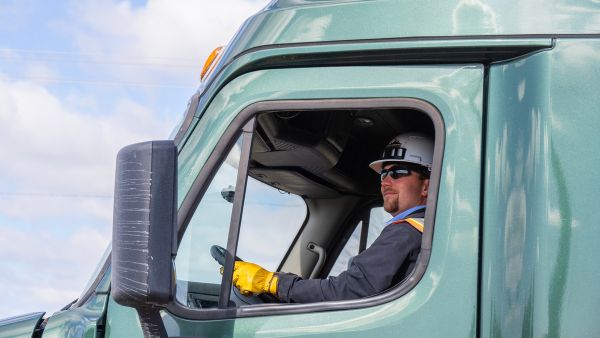
It is very likely that you will, at some point, need to obtain temporary trip and fuel permits or a permit for an oversize/overweight load.
These permits are required any time you need to transport a load which:
- requires you to operate within a jurisdiction in which you do not have permanent credentials, or
- exceeds the size and weight standards set by the state or federal government.
Obtaining these permits allows you to operate within another jurisdiction, or haul an oversize/overweight load for a single trip or a period of time. This is a simple step to take to protect yourself from the hidden costs associated with non-compliance.
The cost of compliance
Fees range greatly from state to state, permit to permit, and can even vary based on load and trip specific details: such as length of time the permit is needed for, or the size and weight of the load. Some permits will be a flat fee for a single day trip, while others may be calculated as an amount per mile or weight.
But what happens when you don’t obtain the permit and do it anyway? Let’s consider some of the often overlooked financial, operational, and safety risks of non-compliance.
The cost of noncompliance
There are many consequences carriers may face when they operate without proper permits, with some being more obvious than others.
- Immediate financial penalties. Operating without the proper authority can result in fines of up to thousands of dollars per violation. These penalties vary by state or jurisdiction, and by type of violation.
- Impoundment and delays. Law enforcement may not simply issue a fine and allow your driver to continue with their delivery. Instead, they may re-route your driver or impound equipment and/or freight in addition to issuing that fine. So now, you have a fine to pay and a delay in operations which will likely ripple on from this job to the next.
- Increased operational costs. With delays come increased operational costs. This can come in the form of additional fuel costs, lodging for your driver, and even potential equipment or freight damage from the extended drive time or impoundment.
- Damage to safety scores and compliance records. Failure to comply with the regulations can result in a higher Compliance, Safety, Accountability (CSA) safety rating. This may lead to increased inspection rates, higher insurance premiums, an elevated risk of audit, and damaged reputation.
- Legal and liability exposure. In the event of an accident, you want to be in the most defensible position. If your driver was hauling an improperly permitted load, it shows the judge and jury that you don’t take the rules seriously, and if you aren’t compliant here, they may begin to wonder, “Where else are you slacking?”
The ROI of compliance
Operating without proper permits can lead to violations, ultimately meaning that the cost of non-compliance is far greater than that of the permit.
Additionally, the benefits of compliance go beyond the initial financial burden, as proper permitting improves efficiency, safety scores, and customer satisfaction – all of which help your business to grow and thrive over time.
Need Permits? J. J. Keller can help!
We make ordering your temporary permits easier so your trucks can get on the road faster. Our state-direct agreements speed up the process and keep turnaround times fast.In fact, during standard business hours, you can get your fuel or trip permit in as little as an hour and oversize/overweight permit in about three hours.
Our trip permit advisers are available 24/7 to assist you. Make one call to J. J. Keller to keep your trucks and trips in compliance!